Building AI Literacy in K-12 Classrooms: Reflections from Our Doha Educator Workshop

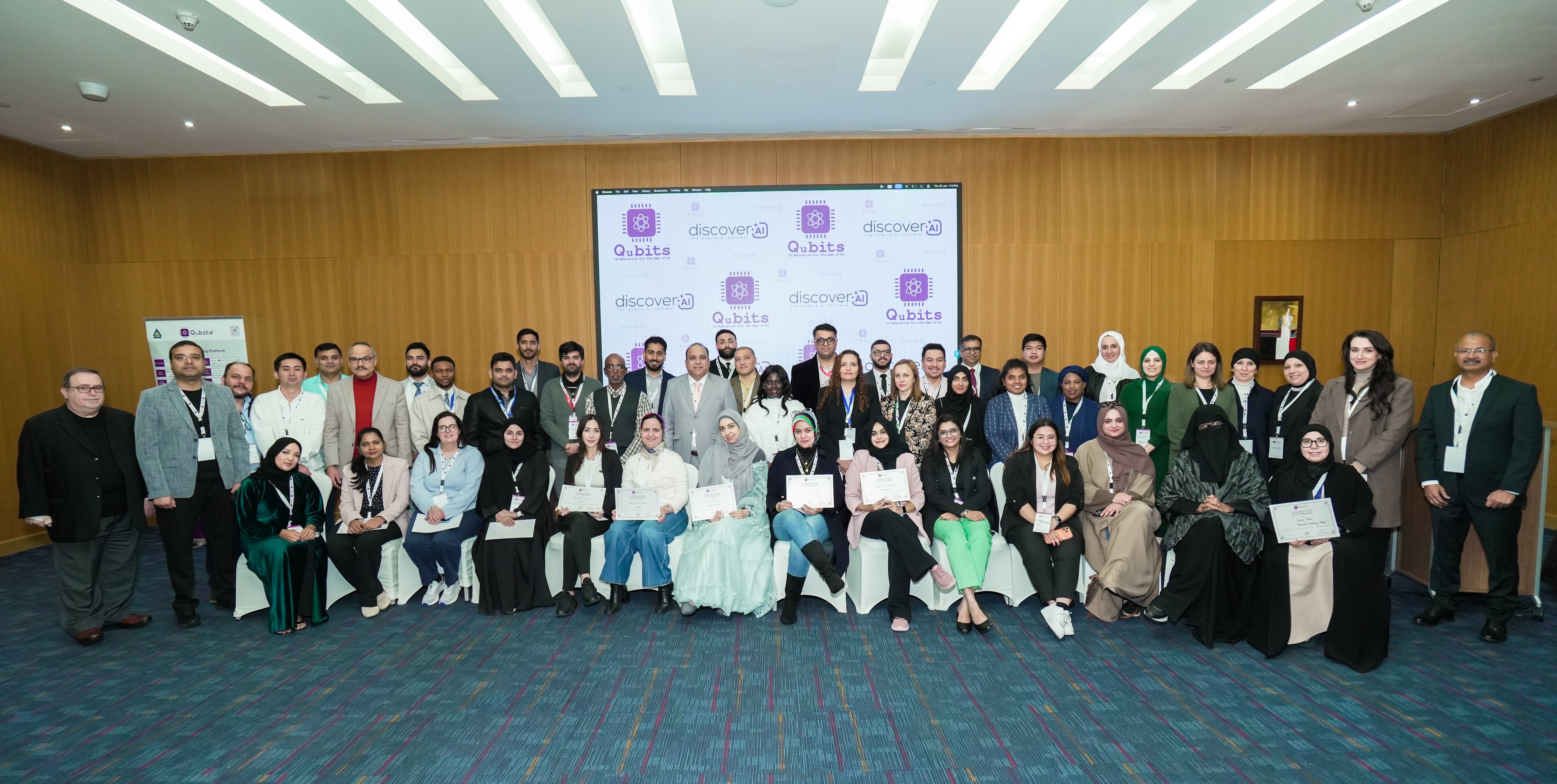
Last week, we gathered with educators in Doha for a hands-on exploration of what AI education actually looks like in K–12 classrooms. The question wasn't whether schools should teach artificial intelligence. Educators everywhere recognize that AI literacy is becoming essential for students entering an increasingly digital world. The real question was how.
Here's what we explored and what schools can take away for their own AI literacy programs.
Why AI Literacy Matters Now
Students today interact with AI systems constantly, through voice assistants, recommendation algorithms, and social media feeds. Yet most have little understanding of how these systems work, what data they collect, or whose interests they serve.
AI literacy isn't about training future developers. It's about helping students think critically about the technologies shaping their lives.
The Challenges Schools Face
During our workshop discussions, educators identified common barriers to AI education:
Lack of teacher preparation and confidence
Uncertainty about where AI fits in an already full curriculum
Questions about how to assess understanding beyond factual recall
These challenges aren't unique to any one region. They're universal barriers that any comprehensive AI literacy program needs to address.
The Framework Approach
Effective AI education needs more than good intentions. It requires structured learning progressions that build systematically across grade levels.
The curriculum framework we explored is informed by two widely referenced educational frameworks:
AI4K12 Big Ideas (Technical Foundation)
Five core concepts that structure how students understand AI systems:
Perception – How AI gathers information through sensors
Representation & Reasoning – How AI organizes and uses knowledge
Learning – How AI improves performance from data
Natural Interaction – How humans communicate with AI
Societal Impact – How AI affects individuals and communities
UNESCO AI Competency Framework (Human Dimensions)
Critical thinking about:
Ethics and bias in AI systems
Privacy and data rights
Social equity and access
Responsible AI design
Together, these frameworks create a progression where students move from basic recognition (identifying sensors on devices in early grades) to sophisticated analysis (examining algorithmic bias and designing ethical AI systems in high school).
What This Looks Like Across Grade Levels
Elementary School (Grades K-5)
Focus: Students recognize AI in daily life and understand foundational concepts through accessible activities.
Example Concept: Young students learn that computers gather information through sensors. They might identify cameras and microphones on classroom devices, experiment with voice commands, and observe when speech recognition works well and when it struggles.
Approach: Visual tools and hands-on activities that don't require coding skills.
Middle School (Grades 6-8)
Focus: Students apply AI concepts, examine how data quality affects outcomes, and begin recognizing algorithmic bias.
Example Concept: Students explore how AI learns from data. They might train simple classifiers, observe that more examples generally improve accuracy, and discuss what happens when the training data doesn't represent diverse populations.
Approach: No-code platforms that let students experiment directly with AI systems.
High School (Grades 9-12)
Focus: Students design AI systems, evaluate ethical implications, and develop informed positions on AI policy questions.
Example Concept: Students investigate real-world AI applications, such as hiring algorithms and content recommendation systems. They analyze how these systems can perpetuate existing biases and propose criteria for evaluating fairness.
Approach: Project-based learning that combines technical understanding with ethical reasoning.
The progression is intentional. Each level builds on previous understanding while introducing age-appropriate complexity.
Key Workshop Themes
Several important themes emerged from our time with educators:
Teacher Preparation
Many educators are comfortable facilitating discussions about traditional subjects but feel less confident explaining technical concepts like decision trees or neural networks.
Comprehensive AI literacy programs require more than introductory workshops. Teachers need ongoing professional development that builds a genuine understanding of the content, not just familiarity with lesson plans.
Assessment Design
How do you evaluate whether a student understands algorithmic bias? Or whether they can think critically about AI system design?
Traditional tests measure factual recall well, but AI literacy involves systems thinking, ethical reasoning, and creative problem-solving. Alternative approaches such as portfolio assessment, project evaluation, and reflective writing provide richer evidence of understanding, though they require structures different from those most schools currently use.
Curriculum Integration
Schools with dedicated computer science courses can potentially implement a sequential AI literacy program. But many schools will need to distribute content across subjects:
Examining algorithmic bias in social studies
Exploring data collection in science classes
Analyzing language processing in literature
Understanding probability in mathematics
This interdisciplinary approach makes efficient use of instructional time and helps students see AI as broadly relevant. However, it requires coordination across departments and adjustments to existing curricula.
Technology Requirements
Schools often worry that AI education requires expensive hardware or specialized labs.
What's actually needed:
Standard computers with internet access
Modern web browser
Audio-visual equipment for perception activities
Free accounts on educational platforms
What's not required:
Specialized AI hardware
Enterprise software licenses
Advanced programming environments
Dedicated computer science lab
Many schools already have much of what’s needed to begin AI literacy instruction.
Real Implementation Challenges
Keeping Content Current
AI capabilities evolve rapidly. Examples that seem cutting-edge quickly become outdated.
The solution is separating timeless principles from time-bound examples. Core concepts like how training data affects model performance and how to recognize bias in automated decisions remain stable. Specific case studies and applications need regular updating.
Building Teacher Confidence
Many educators feel unprepared to facilitate AI discussions, especially on technical topics outside their background.
Effective support includes:
Ongoing professional development beyond initial training
Communities of practice where teachers share implementation strategies
Direct support during early implementation
Clear lesson guides with talking points and anticipated student questions
Coordinating Across Departments
Integrating AI literacy across multiple subjects requires institutional planning:
Mapping which concepts fit naturally in which classes
Ensuring concepts are built appropriately across years
Coordinating assessment approaches
Securing administrative support for curriculum changes
What Students Gain from AI Literacy
The ultimate measure of any curriculum is what students take away.
Technical Understanding
How AI systems gather and process information
Why algorithms make certain decisions
Where bias enters machine learning pipelines
How to evaluate claims about AI capabilities critically
Ethical Reasoning
Recognition that automated decisions aren't neutral or objective
Ability to question whose interests AI systems serve
Understanding of privacy implications around data collection
Skills in advocating for responsible technology design
Broader Capabilities
Confidence in engaging with AI tools across any field
Critical thinking applicable beyond technology contexts
Ability to participate meaningfully in societal conversations about AI
Foundation for technical careers for those who choose that path
This helps prepare students to become informed citizens in an AI-infused world, whether or not they pursue technical careers.
Moving Forward with AI Literacy
The conversation about AI literacy in schools is moving from "whether" to "how." Educators recognize the importance but often lack clear pathways for implementation.
Successful programs attend to both pedagogical quality and practical logistics:
Curriculum content must be accurate, age-appropriate, and built on research about how students learn
Teacher preparation needs to go beyond one-time training to build genuine confidence and expertise
Assessment approaches must align with the competencies being developed
Institutional support is essential for coordinating across departments and sustaining programs over time
Getting Started
Schools interested in implementing AI literacy can begin by:
Auditing current curriculum – Where does AI already appear? What gaps exist?
Identifying teacher champions – Who's interested in facilitating this content across departments?
Reviewing available frameworks – AI4K12 and UNESCO provide solid foundations
Starting small – Pilot with one grade level or subject area before scaling
Building incrementally – Develop teacher expertise and student resources over time rather than attempting full implementation immediately
The schools making the most progress are those treating AI literacy as an ongoing commitment rather than a one-time initiative.
About Qubits
Qubits provides a K-12 AI literacy curriculum informed by established frameworks such as AI4K12 and UNESCO competency guidelines. We combine structured learning progressions with practical implementation support to help schools prepare students for an AI-infused future.
Our approach emphasizes:
Age-appropriate content that builds systematically across grades
Accessibility through no-code tools and visual platforms
Integration of technical understanding with ethical reasoning
Support for teachers through professional development and ongoing resources
Contact us to learn more about how we can support AI literacy education at your school.
*AI4K12 and UNESCO are referenced for educational context. Qubits Learning is not affiliated with or endorsed by these organizations.